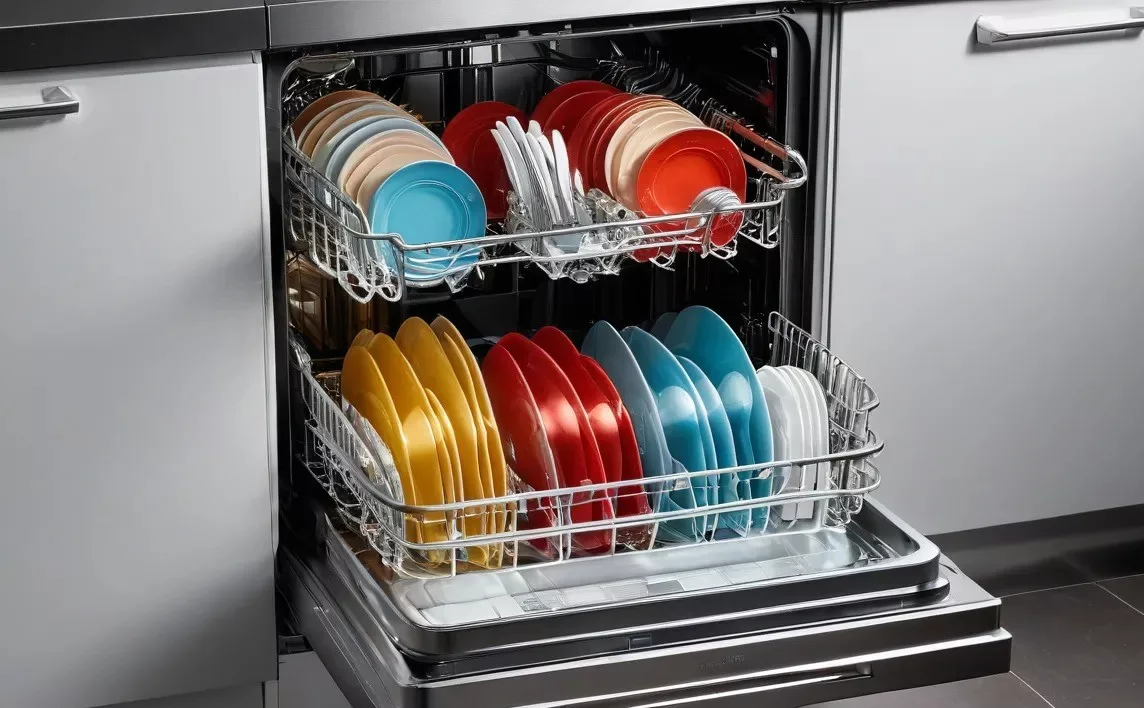
Hello, family! It’s your quick-solution guru! Today, let’s ditch the small talk and dive deep into the world of DISHWASHERS – that tempting yet tricky appliance! How many of you besties have argued over “whose turn it is to do the dishes”? How many times have you stared despairingly at a sink piled high with greasy plates? Let me tell you, ever since I got a dishwasher, my happiness level has shot up exponentially! 🚀 My kitchen feels brighter, and the family harmony is real!
⚠️ Super Long Post Alert! Estimated 8000 characters (Chinese). From dreaming about one to finally getting it, from total newbie to pro user – everything you wanted to know, and things you didn’t even think to ask, are all unpacked right here! Bookmark now, read later!
I. Busting the Myths! How Deep Are Your Dishwasher Misconceptions?
Tempted to buy one but held back by all the “I heard…”? Don’t worry, I get you! I was there too. Let this experienced user debunk those rumors one by one!
- Dishwashers Don’t Wash Clean? ❓ NO! Totally Wrong!
- My Personal Experience: I was skeptical at first too. I deliberately put in overnight pasta plates, bowls with dried-on rice, and greasy wok lids (Note: Not all pots are dishwasher-safe, more on that later). The result? They came out ✨bling bling✨! Much cleaner than my handwashing! Especially the glasses – so transparent, they looked brand new!
- The Science: Dishwashers work using high temperatures (usually 60-70°C or higher), high-pressure water jets (360° spray coverage) + specialized detergents (powerful degreasers). The high temp kills most bacteria (like H. pylori), the high pressure blasts away stubborn grime, and the enzymes in the detergent break down food residue. This combo is way more effective than scrubbing with a sponge! Plus, many dishwashers have intensive programs specifically for tackling heavy grease – it’s a game-changer!
- Dishwashers Waste Water & Electricity? ❓ NO! They Might Actually Save More!
- My Observation: My family of three used to handwash, leaving the tap running endlessly. After washing a big load, the water meter would spin like crazy. Since getting the dishwasher and using the Eco mode, one cycle uses only about 10 liters of water (or even less) – way less than my handwashing! Don’t believe me? Try timing and measuring your water usage next time you handwash.
- The Data: Handwashing dishes from one meal, including rinsing and soaking, can easily use over 30-40 liters of water. Most standard home dishwashers use between 8-15 liters per standard cycle. Electricity-wise, a standard wash costs about 0.8-1.2 kWh, translating to just pennies or cents per wash. Think about the time, effort, and sanity you save – that small electricity cost is nothing! Many machines also have delay start functions, allowing you to run them during off-peak hours for extra savings!
- Can It Wash Everything? Do I Need to Pre-rinse? ❓ Not Everything & Basically No!
- What NOT to Wash: Wooden utensils (warp/crack), non-stick pans (coating damage, unless specifically marked dishwasher-safe), cast iron (rusts), fine china with gold/silver trim (abrasion), certain plastics (check for dishwasher-safe symbol, high heat can warp), copper/aluminum (oxidizes/discolors). So, check for the “dishwasher-safe” label when buying tableware.
- Pre-TREAT, Not Pre-RINSE: This is crucial! Friends, please DON’T rinse the dishes under the tap! The enzymes in dishwasher detergent need “food” (i.e., food debris) to work effectively. If you rinse them clean, the detergent can’t do its job properly! The correct way is: Scrape off large food chunks (like bones, leftovers) into the bin, then put the dishes directly into the dishwasher! Yes, it’s that simple! Sticky sauces, grease – leave it all to the machine! This is the essence of liberating your hands!
II. Smart Shopping! Which Dishwasher is Your Mr./Ms. Right?
The market is flooded with options: built-in, freestanding, sink, countertop… How do you choose? Don’t panic, I’ll guide you!
- Installation Type Determines Look & Space:
- Built-in: Perfectly integrates into cabinetry for the cleanest look and highest aesthetic appeal! Ideal for kitchens undergoing renovation or remodeling. Requires advance planning for water, electricity, and cabinet dimensions. Usually offers larger capacity (8-16 place settings). Mine is built-in; you can’t even tell it’s there when the door is closed – a blessing for perfectionists!
- Freestanding/Convertible: Highly flexible. Buy it, connect the plumbing, and it’s ready to use. Can be placed anywhere suitable in the kitchen or later integrated under a counter (convertible models). Good for existing kitchens or renters. Wide range of sizes available.
- Sink Dishwasher: Designed as part of the sink unit. Relatively easy to install, doesn’t take up extra counter or floor space. Capacity is usually smaller (around 6 place settings), suitable for small apartments or households with few people. Can also wash fruits, seafood, etc.
- Countertop: Most compact. Sits directly on the counter, easy installation (often just needs a T-adapter for the faucet). Ideal for 1-2 people or extremely limited kitchen space. Capacity is typically 4-6 place settings. Downside: takes up valuable counter space and has limited capacity.
- Capacity (in Place Settings) Depends on Household Needs:
- “Place Setting” is an international standard (plate, bowl, cup, cutlery, etc.). Remember the rule: “Go big or go home (or at least, bigger is better)”! Why?
- Wash Pots & Pans Too: You think it’s just for plates? Pots, pans, mixing bowls, cutting boards, spatulas… stuff everything you can in there! Large capacity means you tackle it all in one go. Running two cycles isn’t as convenient.
- Dinner Parties / Batch Washing: Occasional guests, or if you prefer to accumulate dishes for a day or two, a larger capacity is essential.
- Suggestions:
- 1-2 people: 6-8 place settings (Consider countertop, sink, or small freestanding).
- 3-4 people (typical family): 8-10 place settings (Built-in, freestanding are main choices).
- 5+ people or frequent entertainers: 13+ place settings (The bigger, the better!).
- My Hard-Learned Lesson: I initially thought 8 place settings were enough. Turns out, a slightly larger wok took up half the space! I later upgraded to 13 place settings, and it’s pure bliss! Woks, stockpots, bowls – all go in together. So satisfying!
- “Place Setting” is an international standard (plate, bowl, cup, cutlery, etc.). Remember the rule: “Go big or go home (or at least, bigger is better)”! Why?
- Core Features Define the Experience Ceiling:
- Washing System: Mostly spray-arm based. Look at the spray arm design (more isn’t always better, consider coverage and pressure), and advanced tech like satellite spray arms (for corner-to-corner cleaning).
- Drying Method (Crucial! Affects dryness & energy use):
- Condensation/Residual Heat Drying: Uses the heat from the final hot rinse to evaporate water, which then condenses on the cool inner walls or a dedicated condenser. Pros: Energy efficient, simple mechanism. Cons: Drying performance can be mediocre, especially for plastics and the interior walls, often leaving things slightly damp. May require opening the door to air dry.
- Hot Air Drying: Uses a heating element and fan (like a hairdryer) to blow hot air onto the dishes. Pros: Excellent drying results, faster, dishes are properly dry, inhibits bacteria. Cons: Uses slightly more energy, higher cost. (My personal strong recommendation! Once you try it, you can’t go back!)
- Zeolith Drying: Uses Zeolite minerals’ natural property of absorbing moisture and releasing heat. Pros: Superb drying performance, very energy efficient, also absorbs odors. Cons: Higher technology cost, usually found in premium models. (Worth it if budget allows!)
- Auto Open Drying: The door automatically pops open slightly at the end of the cycle, using air circulation to speed up drying. An effective and economical supplementary drying method, often combined with condensation drying.
- Sanitization Options: High temperature (pasteurization level) is standard. Many models offer extra features like UV light, Silver Ions, photocatalysis, etc. Consider these based on your needs, especially for families with babies or health concerns.
- Water/Energy Efficiency Rating: Choose models with top ratings (e.g., Grade 1 in China, Energy Star internationally) for long-term savings and environmental friendliness.
- Smart Features: WIFI connectivity, app remote control, auto-dosing detergent, water turbidity sensors that automatically adjust the cycle, etc. These are nice-to-haves; choose based on need. I find delay start and status notifications quite useful.
- Tub Material & Rack Design:
- Tub Material: Primarily 304 stainless steel – durable, easy to clean, resistant to bacteria. Some high-end models might have a plastic base (for specific functions). Check if the entire interior is stainless steel; it’s generally preferred.
- Racks: The design heavily impacts usable capacity and ease of use!
- Adjustability: Can you adjust the height? Fold down tines? This allows flexibility for different dish sizes and large items (like pots).
- Zones: Are there dedicated cutlery baskets, or a third rack at the top (great for cutlery, long utensils, small items)?
- Material: Nylon coating on racks is durable and rust-resistant.
- Tip: If possible, check out the racks in a physical store. Feel how smoothly they slide and how easy they are to adjust.
III. Using It Efficiently! Secrets to Maximize Dishwasher Performance!
Buying a dishwasher isn’t the end game; using it correctly makes all the difference!
- Proper Loading is KEY! (Pay Attention!)
- Principle: Ensure water jets can reach all soiled surfaces, and water can drain away easily.
- Techniques:
- Place bowls, cups, and deep plates facing down at an angle to prevent water pooling.
- Stand plates vertically between the tines, leaving space.
- Do NOT overlap or nest items! Blocking water flow means items won’t get clean!
- Place cutlery handles down in the basket (or lay flat on the third rack), spread out.
- Make sure no items block the spray arms’ rotation! Give them a spin by hand after loading.
- Load large items like pots and pans on the bottom rack, opening facing down or sideways.
- Choose and Use the “Big Three” Correctly: Detergent + Rinse Aid + Salt
- Detergent (Core Cleaning Power):
- Tablets: Most convenient, often all-in-one (detergent, rinse aid, salt functions). Good for simplicity. Note: all-in-one functions can sometimes be redundant if you add separate agents.
- Powder: Lower cost, flexible dosage based on soil level.
- Gel: Dissolves quickly, less prone to residue, good for quick cycles.
- Choice: Major brands like Finish, Cascade, etc., are generally good. Experiment to find what works best for your machine and water. I personally use Finish All in 1 Max tabs for convenience!
- Rinse Aid: Aids drying by reducing water surface tension, helping water sheet off and preventing spots/streaks, making glassware and stainless steel shine. (Very important! Especially for condensation drying machines!) There’s a dedicated dispenser; fill it up, and the machine releases it automatically (it’ll tell you when it’s low).
- Dishwasher Salt: Softens hard water, preventing limescale buildup inside the machine and on dishes, protecting the appliance. (Essential in hard water areas!) This is NOT table salt! There’s a special salt reservoir; fill it, and the machine uses it as needed. Many all-in-one tabs contain salt substitutes, but if your water is very hard, using separate salt is still recommended. You can test your water hardness with strips.
- Detergent (Core Cleaning Power):
- Smart Program Selection:
- Normal/Standard: For moderately soiled dishes, balances cleaning and efficiency.
- Eco: Longest cycle, but uses lower temps and less water, most energy/water efficient. Ideal for lightly soiled loads or when you’ve accumulated a lot.
- Intensive/Pots&Pans: High temp, high pressure, long duration. For heavily soiled items, baked-on food, greasy pots (if dishwasher-safe).
- Quick/Rapid: Short cycle (30-60 min). For lightly soiled items needed quickly.
- Glass/Delicate: Lower temp, gentle pressure. Protects delicate glassware.
- Pre-rinse: Use if dishes will sit for a long time before washing to prevent drying and odors. Not recommended for regular use (wastes water, less effective main wash).
- My Go-To’s: Eco mode for daily loads (saves money, cleans well). Intensive after dinner parties or greasy pots. Quick wash if I need glasses fast.
IV. Routine Maintenance! Keep Your Hard Worker Happy for Longer!
Want your dishwasher to perform at its best for years? Show it some love!
- Clean the Filter Regularly (1-2 times/month): This is THE most important step! The filter traps food debris. If clogged, it hinders water flow, affects cleaning, and can cause odors. Usually located at the bottom, easy to remove. Take it out, scrub with a brush, rinse, and put it back. Super easy!
- Check & Clean Spray Arms (Quarterly): See if spray holes are blocked by small particles. If so, clear them with a toothpick or needle. Arms are usually removable for rinsing.
- Wipe Door Seals (Occasionally): The rubber seals around the door can collect grime. Wipe them clean with a damp cloth.
- Internal Cleaning/Descaling (Every 6 months or per water hardness): Use a dishwasher cleaner or descaler fluid. Run an empty cycle on a high-temperature setting for a deep clean and descale.
- Refill Salt and Rinse Aid Promptly: Most machines have indicator lights. Refill when they light up.
V. My Honest Thoughts & Conclusion
Besties, seriously, the dishwasher is hands down in the TOP 3 happiness-boosting appliances in my home, maybe even number one! It’s not just about saving dishwashing time; it’s about:
- Freeing Up Hands and Time: Saving at least 30 minutes daily equates to over 180 hours a year! Use that time to watch dramas, read, play with kids, or just zone out – isn’t that wonderful?
- Reducing Household Conflicts: The age-old question “Whose turn is it?” vanishes! Family harmony level UP UP!
- Improving Hygiene: High temps + specialized detergents sanitize far better than handwashing. Especially great for families with babies or sensitive stomachs.
- Soothing OCD: Watching a pile of greasy dishes go in and emerge 1-2 hours later as sparkling clean, dry, shiny works of art… that feeling, you only know it when you experience it!
If your budget and kitchen space allow, don’t hesitate! Buy it sooner rather than later! When choosing, consider your family size, kitchen layout, budget, and desired features (drying, capacity, smart functions). Remember the key points: “bigger is better,” “prioritize hot air/Zeolith drying,” “pay attention to rack design,” and “maintain regularly.”
My fingers are aching from typing all this! Hope this helps anyone on the fence! What dishwasher do you use? Any tips or pitfalls you’ve encountered? Let’s chat in the comments! 👇💬